
The future is everywhere. It appears in technology advertising, policy documents, investment narratives, and popular media. It shows up as promise or threat, optimisation or collapse. Smart-city visions, frictionless digital lives, and stories of systemic breakdown all organise our sense of what tomorrow might hold. Yet the future often feels strangely difficult to grasp.
In our work at Open Future Lab, conversations about long-term financial well-being rarely revolve around spectacular visions. Instead, people speak about uncertainty, small compromises, deferred plans, and the effort of staying oriented toward tomorrow without clear guarantees. The future is not absent from everyday life. But it is rarely experienced as a dramatic event waiting to arrive.
This gap matters. Many of the futures that circulate most visibly in media and public discourse are imagined as things that arrive. They promise a moment when everything finally adds up: systems succeed or fail, progress is delivered, or catastrophe revealed. Whether optimistic or dystopian, these futures organise time around endpoints.
Financial life rarely works this way. Long-term systems such as pensions, insurance, or investment systems depend on people acting today without knowing how outcomes will unfold decades later. Responsibility is carried forward through ongoing commitments rather than decisive moments.
This article explores the tension between these two temporal attitudes. It looks at how contemporary media shape our sense of time and how this affects our expectations of the future.
The question is not what the future will be. It is how we are learning to live with it.

Perfection and ruin share the same fantasy
At first glance, perfected and ruined futures appear to pull in opposite directions. On one side are polished visions of optimisation: smart-city renderings, frictionless financial systems, and technology-led futures in which complexity dissolves into efficiency. On the other are recurring images of collapse, where infrastructures fail and survival replaces progress. One reassures, the other warns. Yet beneath this contrast lies a shared assumption. Both imagine the future as something that arrives.
In these narratives, the future functions as a destination. It marks a point at which systems finally succeed or finally break, where the consequences of the present become visible all at once. Time is organised around endpoints. Meaning lies in what the future eventually reveals.
This framing subtly reshapes how responsibility is understood. When the future is imagined primarily as an outcome, action in the present comes to be justified by what it will deliver or prevent. Maintenance, adjustment, and care recede into the background, while decisive interventions and final results take centre stage.
Media images reinforce this pattern. Optimised futures compress decades of institutional change into smooth images of control. Collapse narratives condense long histories of tension into sudden moments of breakdown. In both cases, complexity is flattened into a legible image that promises clarity later.
The issue is not that such futures are wrong. It is that, taken on their own, they train us to expect the future to appear as an event rather than as an ongoing condition: something that happens to us, rather than something we continuously inhabit and reproduce.
How culture teaches to live without arrival
Alongside these narratives of arrival, a different relationship to the future has become increasingly familiar across contemporary culture: futures that never fully settle. In many stories, endings are delayed, softened, or left open. Consequences unfold, but rarely resolve once and for all. What matters is less the final state than the ongoing process of adjustment.
Different media explore this in different ways.
Some narratives extend the future indefinitely. Large-scale franchises such as the Marvel universe continually reopen events that once appeared decisive. Characters return, timelines shift, and conclusions are treated as provisional rather than final. Instead of moving toward a clear ending, the future remains open so that stories can continue.
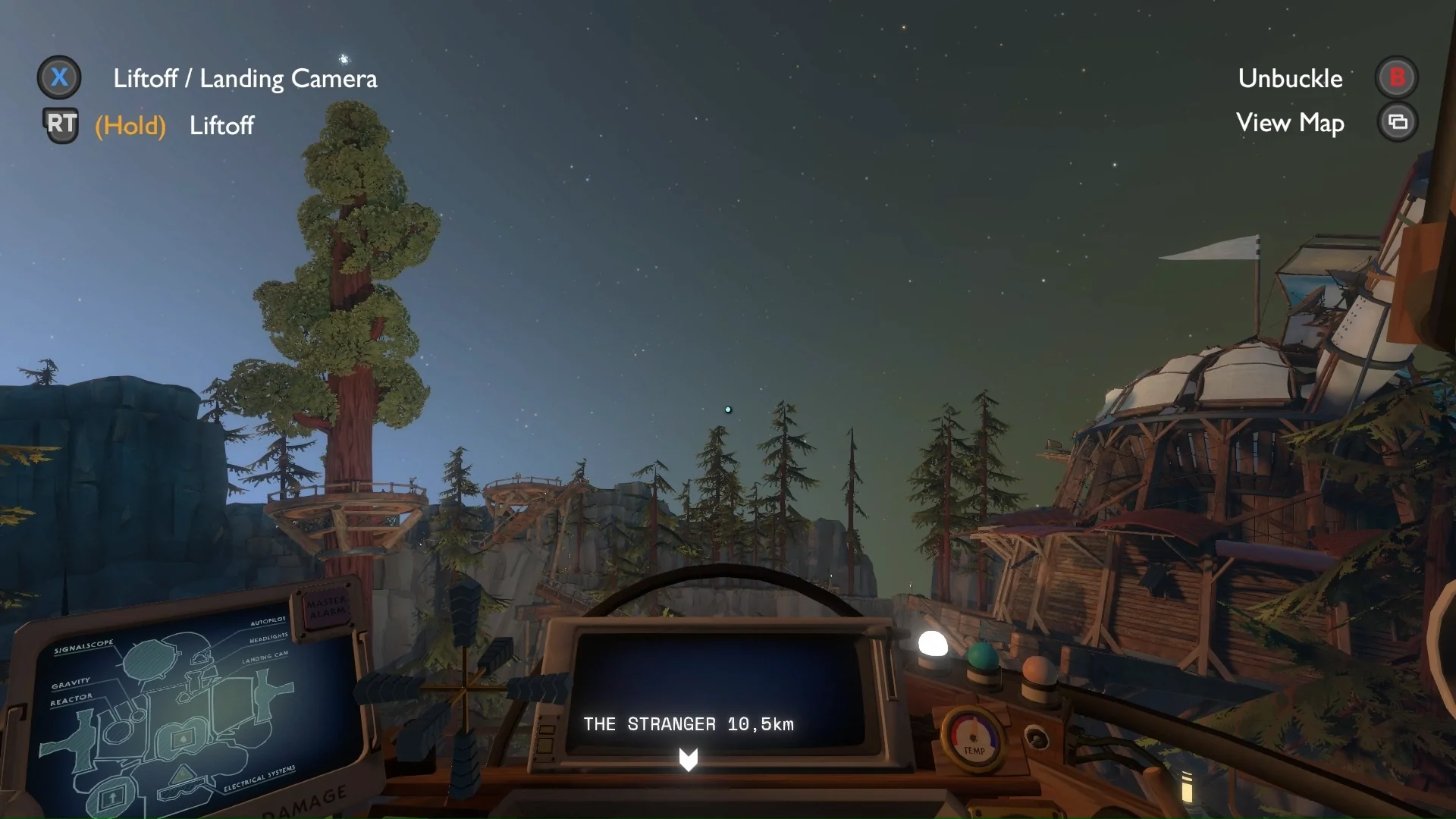
Multiverse stories are not unique to franchises. Think of Oscar-winning Everything Everywhere All at Once (2022), for example, where futures are presented as parallel and interdependent possibilities rather than singular outcomes. And this logic of malleable futures echoes that of looped narrative structures found in video games such as Outer Wilds (2019) or series like Russian Doll (Season 2, 2022) that organise time through time loops, where the future can be revisited and slightly altered with each iteration.
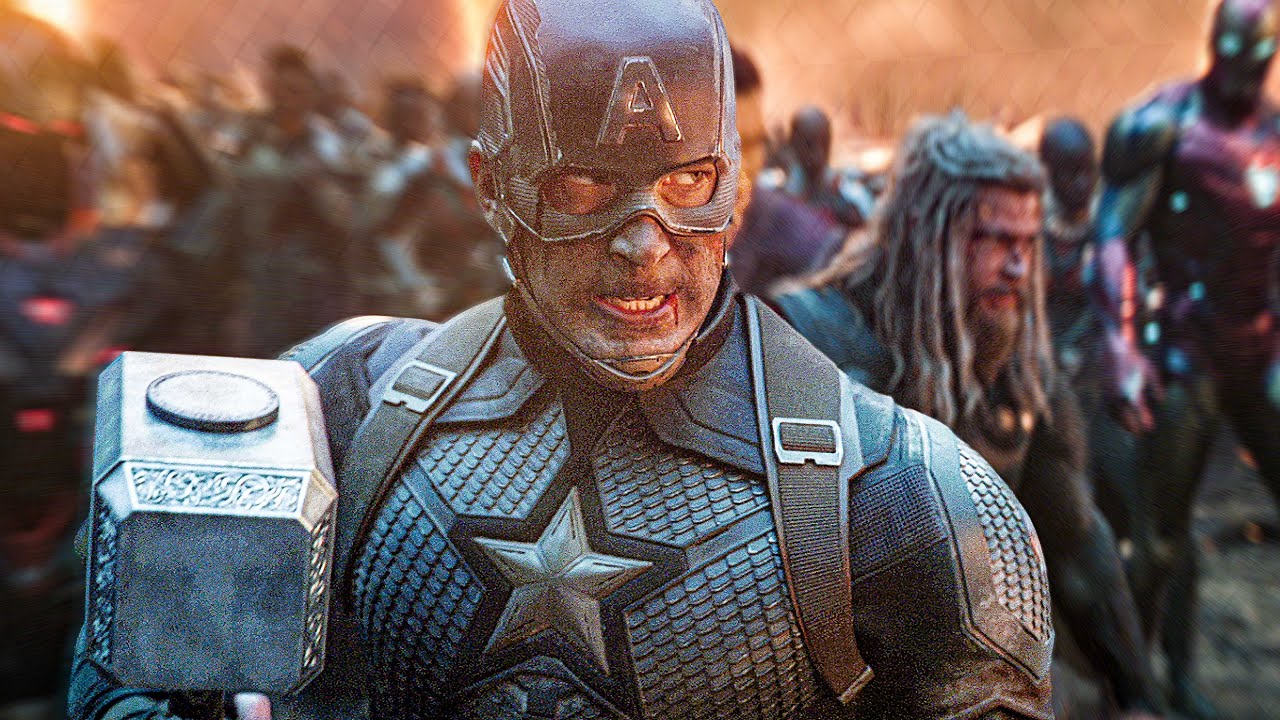
Franchises are, however, unique in that they institutionalise this open-endedness to sustain engagement. Their narratives are designed not to conclude but to remain expandable, capable of absorbing new characters, timelines, and reinterpretations over time. The open timelines can extend backwards too with prequels. Prequels explore known futures. Popular works such as the TV show Better Call Saul (2015-2022) invite audiences to dwell in a timeline whose outcome is already fixed, shifting attention away from what will happen toward how events gradually take shape.
Across these forms, the future remains emotionally significant, but rarely final. Consequences can be revisited and outcomes stay provisional. Engagement does not depend on believing that history will culminate in a single decisive moment.
There are reasons this temporal structure resonates today. When political, ecological, and economic horizons appear unstable, open-ended futures make it easier to remain involved. They allow adjustment without demanding belief in progress or redemption.
Under conditions of uncertainty, the ability to continue, revise, and try again can itself become a form of care.
What this makes possible, and what it forecloses
Futures that do not arrive are not simply a retreat from responsibility. Under uncertain conditions, they enable ways of living with time that might otherwise feel impossible. Open-ended futures support patience, adaptability, and forms of care that unfold gradually. They allow people to stay engaged without requiring faith that everything will eventually resolve.
Yet this temporal stance also has limits. When futures remain perpetually revisable, commitments can struggle to hold. Responsibility does not disappear, but it becomes experienced as ongoing adjustment rather than as something that accumulates weight over time.
This tension matters because many of the arrangements that underpin collective life depend on duration. Pension systems rely on contributions made long before benefits become visible. Insurance pools risk across generations. Infrastructure projects require decades of sustained investment before results appear.
Such systems depend on a shared willingness to act for futures that remain uncertain and distant. When cultural habits increasingly frame the future as endlessly open or revisable, these long-term commitments can begin to feel fragile or unevenly distributed.
There is also a quieter risk. Endurance can begin to replace transformation. The ability to cope becomes a value in itself, while questions about whether underlying conditions should change are postponed.
The challenge is therefore not to choose between endurance and transformation, but to find ways of holding them together: futures that remain adaptable while still capable of sustaining shared obligations.
Practising the future differently
Some artistic and design practices offer glimpses of another relationship to time. Rather than predicting or proposing solutions, they create situations in which the future becomes present in everyday life.
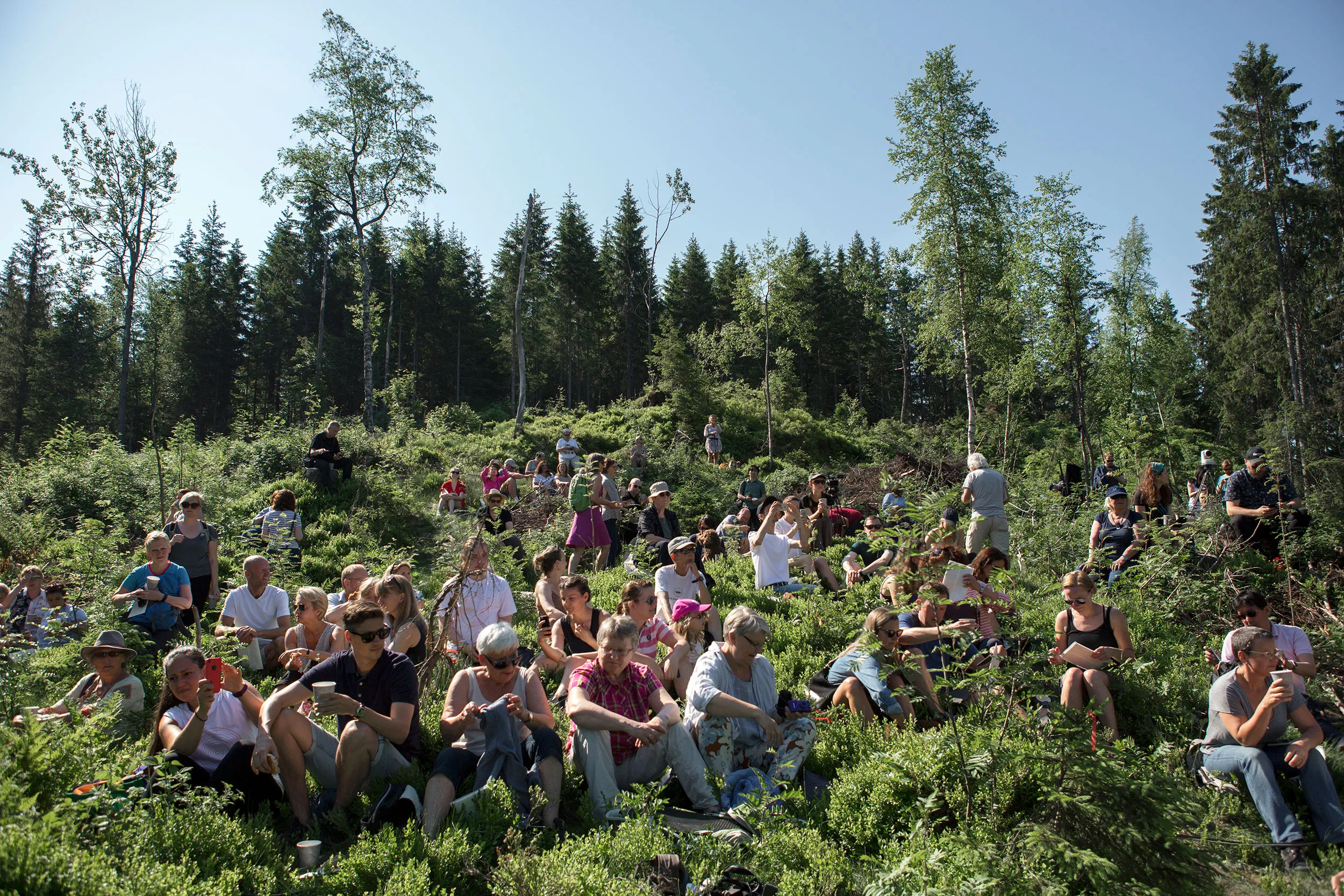
One example is Katie Paterson’s Future Library (2014-2114). Each year, a writer contributes a text that will remain unread until 2114. The manuscripts are stored in a specially designed room in the Deichman Public Library in Oslo, while a forest planted specifically for the project will eventually supply the paper used to print them. For a century, the work exists without delivering content, feedback, or immediate payoff.
In our conversation with Anne Beate Hovind, who directed the project, she described how its meaning lies less in the texts themselves than in the long chain of care required to sustain it. Forests must be maintained, archives protected, and institutions entrusted with carrying the work forward for generations who will not see its completion. Participants contribute, especially during the yearly gatherings to store a new manuscript, without knowing the outcome or receiving confirmation that the effort will ever be realised. The meaning of their contribution depends entirely on future custodians who will maintain the project long after the original participants are gone.
The future here is not an event waiting to arrive. It is something entrusted to others.
A more immediate temporal stance appears in Mitigation of Shock (2017-2019) by design studio Superflux. Visitors enter a small apartment imagined in a near future shaped by climate breakdown. The space is filled with improvised systems, adapted appliances, and other material traces of daily life. The future does not appear as catastrophe or salvation. It appears as a set of conditions that must be managed day by day. Life continues through adjustment, improvisation, and care.
In our collaboration with Design Investigations department at the University of Applied Arts Vienna headed by Superflux co-founder Anab Jain, under the brief No More Bullsh*t Futures (2024-2025), this refusal of spectacle was deliberate. What was rejected was not futurity itself, but futures that function mainly as abstraction, branding, or reassurance.
These practices do not provide models that can simply be scaled or copied. Their value lies in how they reshape the experience of time. They make responsibility tangible even in the absence of certainty, prediction, or control.

Keeping the future open
The problem today is not a lack of concern for the future. Futures saturate media, politics, and public discourse. The challenge is that the futures most visible to us often do not align with how futures are actually lived.
They appear either as dramatic destinations that will eventually arrive, or as open-ended processes that never quite settle. Yet many of the responsibilities that shape everyday life lie somewhere in between: sustained commitments made under conditions of uncertainty.
Media matter here because they shape how time is felt and inhabited. They influence what appears urgent, what feels deferrable, and how responsibility is distributed across the present and the future.
For Open Future Lab, this is not simply a theoretical question. Financial well-being unfolds through long-term arrangements that must remain credible even when outcomes are unclear. Supporting these arrangements requires temporal practices that keep futures open without dissolving commitment.
Between fantasies of perfection and spectacles of collapse, what often disappears is the quieter recognition that futures are made gradually through shared practices in the present.
If the future sometimes feels unreal, it may be because we are taught to encounter it mainly as something that will arrive or fail, rather than as something that must be carried, negotiated, and cared for over time.