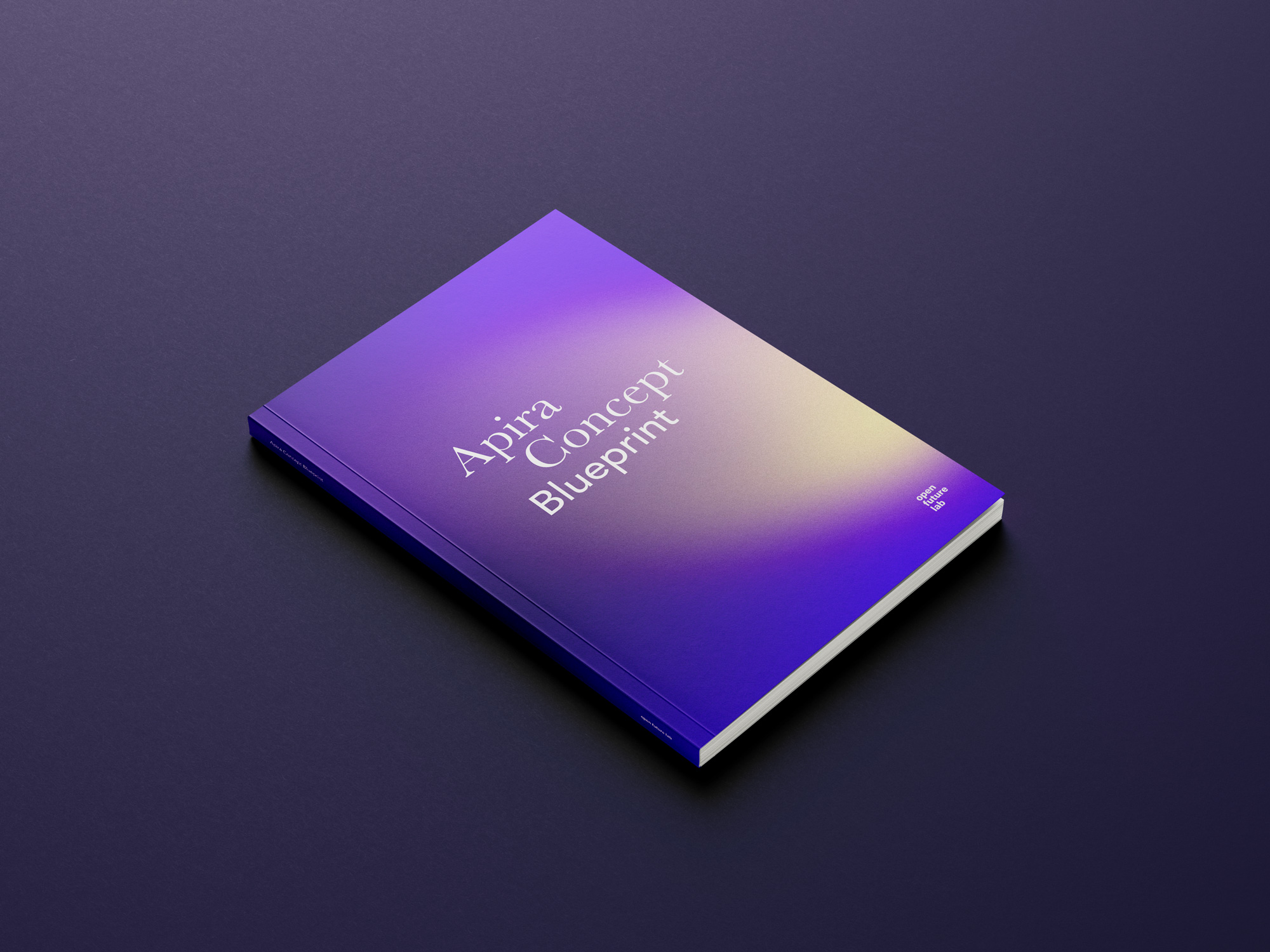
Apira concept blueprint
A fund for every child, invested in the world they will grow into and in their relationship with money.
Executive summary: invitation to build
This blueprint is an invitation to build a long-term investment product for children, together with the tools and companion materials that go with it. It describes the product in enough detail for a bank, insurer, pension provider, mutual or fintech to build its own version, under its own name, mostly from what it already has.
At its core is an investment: money set aside for a child, belonging to the child, and invested for the long term, responsibly and with a purpose—a healthy planet and a future the child will enjoy growing up in. Around it are simple ways for family and friends to contribute, and materials that help the child understand money and build a relationship with it as they grow up. The aim is that every child reaches adulthood with capital of their own, the confidence to use it and a healthy relationship with money – in a world that money has helped to build.
We call the whole Apira, so that its connected parts can be discussed as one thing. It is a working name, and no one is asked to adopt it. The blueprint is released under an open licence: anyone may use, adapt and build on it, for any purpose, and we appreciate attribution where possible.
The work started from three years of research by ERSTE Foundation and the University of Tartu into financial well-being across seven European countries, the study that Open Future Lab, a subsidiary of ERSTE Foundation, was founded to build on. We took those findings further with our own research into families, parenthood and money, and from that research grew the idea for Apira. The idea was then explored and designed in detail. Along the way, its materials and a gifting feature were tested with families. Finally, the whole concept was developed into this blueprint. We hope many will take Apira from idea to reality, and this invitation is here to help make that happen.
What today’s children’s products leave out
A child’s arrival is when families are most ready to think far ahead, and also when many step back from saving and investing. The long-term products that exist for children hold money and hand it over at eighteen. They do little to help a child understand money, or to show what it was doing in the meantime.
Money invested for a child shapes the world that child grows up in, yet it is usually reported just as a number alone. What a young adult needs is both money of their own, and a world worth spending it in. Families with assets have trusts and advisers, while a family starting with five euros a month to set aside for a child has nothing comparable. The institutions that could change this already hold most of what it takes: funds, payment systems, regulatory standing, and relationships with families that last decades.
One fund, three pillars, and two commitments
Each child has one fund, and it stands on three pillars.
- Pillar 1: Reframing impact. Any money invested for a child answers a question: what world would you like your child to live in? Choosing Apira is a family’s answer. The fund opens with one sustainable default investment, so the money works towards that world from the first contribution. Every statement reports, separately, what the money is doing and what it is worth.
- Pillar 2: Lifelong companion. One annual moment and companion materials for each age group help the child build a relationship with money as the fund grows. The materials run from a conversation game for parents-to-be to true money stories for teenagers. Apira offers the questions and leaves the conclusions to the family.
- Pillar 3: Contribution beyond parents. Grandparents, godparents and friends can give from any bank, without an account in the same bank, and as easily as buying a birthday present.
The fund belongs to the child from the first day. Nothing leaves it before eighteen, and a family that may need the funds is offered other help instead. At eighteen, the young adult takes control of all of it.
Funds will differ in size, because families can put in different amounts. The relationship with money a child builds along the way does not have to differ. Apira is designed to reach the child whose family rarely takes part as surely as the one whose family always does.
Two commitments cannot change: impact in every investment decision, and a long horizon held to the end. Everything else can be adapted to a market, a balance sheet or a customer base, including the name.
How to read the blueprint
The blueprint is for people in financial institutions who decide what gets built and who builds it in retail investment, product, design, compliance, operations and customer service. It is also for foundations, researchers and others working on financial well-being.
The chapters do different jobs. Each begins with a short introduction to what it covers.
- Introduction: the premise makes the case: why children need more than a balance, and why financial institutions are well placed to provide it.
- Definition: what Apira is sets out what is being built, where it sits among a family’s accounts, and the two commitments that cannot change.
- Design rules: concept architecture overview gives the rules any version has to follow, and the main reason behind each. It is what lets a team adapt Apira to its own market without losing what makes it work.
- Implementation: building the experience follows the principles through the four stages a family goes through, from first hearing about Apira to the handover at eighteen, showing what the parent, the child and every giver meet along the way and what has to be in place behind the scenes. It is the most practical chapter.
- Conclusion: starting now sets out the questions a board can put to any version, and the first small moves.
The appendices hold the design rules, with the full reasoning and evidence behind each rule, the future signals behind the design, case studies of the materials (ready to download and adapt), and an overview of the gifting feature test in a bank in Romania.
Where to start depends on what you need:
- Deciding whether to build: the Introduction, the Definition and the Conclusion.
- Planning a first version: the Definition, the Design rules and then the Implementation, with the design rules reader close at hand for the reasons.
- Shaping what families and children receive: Pillar 2: Lifelong companion and Education: what a child learns along the way, in the design rules reader, and the case studies in the appendix.
Parent means whoever is raising the child. Companion materials, or materials for short, are what Apira sends a family: books, games, journals and activities.
If many institutions build it
One institution building Apira gives some families a better start. Many building it would mean every child has somewhere to begin, whichever bank their family uses. A generation would reach adulthood with capital of their own and a relationship with money built while they grew up.
Their money would also be at work while they grow up: in energy that can be renewed, buildings that need less of it, and working lives that are good for people. Added up across many institutions, money invested for children would become one of the ways a society invests in the world those children will inherit.
So build your own version, under your own name. Start smaller than feels comfortable, as long as impact is in it from the first day and it is honest about risk and cost. Share what you learn, failures included, so that the next institution starts where you stopped. Every year of waiting is a year of growth some child does not get back.